
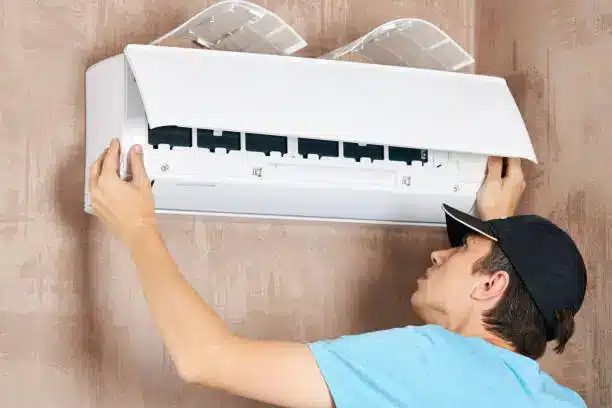
Knowing when to replace your AC filter is key for your health and your HVAC system’s performance. A clean filter improves air quality and saves energy, cutting down your bills. Regular AC maintenance also stops problems caused by dirty filters, saving you from expensive repairs.
In Australia, it’s important for homeowners and businesses to know when to change their HVAC filters. Local experts like Alpha Air offer valuable advice on residential heating and cooling.
Understanding the Role of Your AC Filter
AC filters are key to your HVAC system’s performance. They catch dust, allergens, and other particles that could spread in your home. Knowing how AC filters work helps keep your air clean and your system running smoothly.
What Does an AC Filter Do?
AC filters block dust, pollen, pet dander, and smoke. This keeps your air clean. A clean filter also makes your HVAC system work better. If filters get clogged, your system uses more energy.
Benefits of a Clean Filter
Changing or cleaning your AC filter often has many advantages. It cuts down on allergens, making your home healthier. It also saves you money on energy bills and makes your HVAC last longer. Keeping your filters clean is good for your health and wallet.
Signs of Poor Air Quality
It’s important to know when the air quality in your home or office is not good. The state of your AC filters is key to keeping the air clean. Spotting certain signs can tell you it’s time to check and clean your filters.
Increased Dust and Allergens
Seeing more dust and allergens around is a clear sign of poor air quality. Dirty filters can’t catch dust, pollen, and other particles well. This makes allergies and breathing problems worse. Keeping your filters clean helps reduce allergens and improves air quality.
Unpleasant Odors from Your AC
Bad smells coming from your AC unit are another warning sign. It means your filters are probably clogged or dirty, letting mould and bacteria grow. These smells not only mean your system is broken but also harm your health. Keeping your filters clean is crucial for fresh, healthy air indoors.
Visual Signs to Look For
Regularly checking your AC filter helps you spot when it needs maintenance. Seeing signs of AC filter problems can stop it from working well and affect air quality. Look out for these signs to know when to change your filter.
Dirty or Clogged Filter
First, check if your AC filter is dirty or clogged with dust and particles. A dirty filter means it’s not working right. It can make your air conditioner work too hard.
A clear sign it’s time for a new filter is when it looks dark or very dirty.
Visible Damage or Wear
Also, check for any damage or wear on the filter. Look for tears, holes, or if it’s deformed. Damage can make the filter less effective and cause problems in your AC system.
Being careful about these signs helps keep your air clean and your AC working well.
Monitoring Your Energy Bills
Many homeowners don’t see the link between their HVAC system and energy costs. Looking at energy bills can show patterns that mean it’s time for maintenance. A sudden jump in energy costs often means your HVAC system isn’t working right.
Sudden Increase in Energy Costs
When your energy bills go up without using more, it might be your AC filter’s fault. A clogged filter makes your HVAC system work harder, using more energy. Watching your bills can help you spot problems early and save money.
Impact of a Dirty Filter on Efficiency
A dirty filter hurts your HVAC system’s efficiency and air quality. It makes the system work too hard, leading to more wear and tear. Regular filter cleaning can save energy and money by keeping your system running smoothly.
Changes in AC Performance
Changes in AC performance can show there’s a problem with your air conditioning. A dirty or clogged filter can block airflow. This makes cooling uneven in your home.
This uneven cooling can make some rooms too hot or too cold. It’s often because of poor airflow from a dirty filter. A clean filter helps air move freely, keeping temperatures even.
Uneven Cooling in Your Home
Some rooms might feel warmer or cooler than others. This is usually because of bad airflow from a dirty filter. A clean filter ensures air moves well, keeping temperatures steady.
When filters get ignored, the system has trouble cooling evenly. This makes your home uncomfortable.
Increased Noise Levels
Unusual or louder noises from your AC might mean it’s under strain. A dirty filter makes the unit work harder, leading to parts working less well. This can cause bigger problems and expensive fixes if not fixed.
Regular filter cleaning stops these issues. It lets your system run quietly and efficiently.
Frequency of Filter Replacement
Knowing when to replace filters is key to keeping your HVAC system running well. Different filters need to be changed at different times. This depends on their type, material, and where they’re used. Following maintenance guidelines helps keep the air clean and stops the system from working too hard.
General Guidelines for Different Filters
Filters have different lifespans. Fibreglass filters usually need to be changed every one to three months. Pleated filters, which catch smaller particles, can last up to six months. HEPA filters, which filter out even more, can last a year, depending on how they’re used and the environment.
Checking these filters regularly helps them work their best.
Factors Influencing Replacement Frequency
Several things affect how often you need to replace filters. Homes with pets might need to change filters more often because of pet dander. Areas with a lot of pollen can also mean filters need to be changed more during allergy seasons.
Homes with more people tend to have more dust and pollutants. This means filters need to be changed more often. Having a regular routine for checking and changing filters helps keep the air clean and makes your HVAC system last longer.
Importance of Regular Maintenance
Regular maintenance of HVAC systems is key to their proper working and efficiency. It’s vital to keep them in top shape. This not only makes filters last longer but also boosts the system’s overall performance.
By sticking to a maintenance routine, you can avoid system failures and expensive repairs. Neglecting maintenance can lead to big problems.
How Maintenance Can Extend Filter Life
Maintenance practices help filters last longer. Regularly changing or cleaning filters stops them from getting clogged. This keeps the air flowing smoothly.
Clean filters also improve the air quality inside your home. They help your HVAC system work at its best. Spending time on maintenance means your filters will last longer, saving energy and keeping your system reliable.
Scheduling Routine Inspections
Regular inspections are crucial for HVAC upkeep. They let technicians check the system’s parts and spot issues early. This ensures the system runs well.
Having a schedule for professional checks can bring many benefits. You’ll see better efficiency, longer equipment life, and more comfort at home.
Seasonal Considerations
Knowing when to maintain your HVAC system is key for its best performance. As the weather changes, so do the needs of your heating and cooling. Homeowners should check filters regularly to keep systems running smoothly. Clean filters mean better air quality and efficiency.
When to Check Your Filter Before Summer
As summer nears, it’s time to check your HVAC system often. This is crucial for getting ready for the heat. Clean filters help with airflow and cut down on energy use.
Doing this right can make your system work better and improve the air inside your home.
Preparing Your System for Winter
Winter brings its own set of challenges, needing special preparations. It’s important to check your HVAC system, especially the filters, to keep dust and allergens out. Making sure your system is ready for winter helps keep your home warm and cosy.
Regular upkeep is essential to avoid expensive repairs and to keep heating efficient.
Health Implications of a Dirty Filter
Keeping indoor air clean is key for everyone’s health, especially kids and the elderly. A dirty air filter can cause big health problems. It makes allergies and breathing issues worse.
Effects on Allergies and Respiratory Health
A dirty filter lets dust and allergens into homes. This can make allergies worse, causing sneezing, runny noses, and itchy eyes. People with asthma or other breathing problems face serious health risks.
Risks for Children and the Elderly
Children and the elderly are more affected by bad air. Poor air can lead to breathing problems and long-term health issues. Keeping air conditioning systems clean, including changing filters, helps avoid these risks. A clean air conditioning system is vital for their health.
Conclusion: Stay Ahead of AC Problems
Keeping your air conditioning system in top shape is key for comfort and performance at home. Knowing when to replace your AC filter is important. This helps avoid bigger issues later on.
Regular checks and timely replacements boost air quality and energy efficiency. This can also save you money on your utility bills.
Final Tips for Filter Maintenance
Good maintenance habits can extend your AC system’s life. Check your filters monthly. Replace them every one to three months, based on how often you use them and the type of filter.
Using high-quality filters and getting your AC serviced by pros are also good tips. This keeps your system running smoothly.
Services like those from Alpha Air make keeping your AC efficient easy. Working with experts helps you stay ahead of AC issues. This keeps your home healthy and energy-efficient for your family.