

How Much Does It Cost to Run a Split System in Melbourne? (2025 Guide)
When people ask what a split system actually costs to run in Melbourne, they usually want a straight answer they can trust rather than a brochure promise, and the truth is that the number shifts with three things you can control: how well the unit is sized and installed, the set points you choose, and the way your home holds or leaks heat as our weather swings from northerly scorchers to damp winter mornings. If you’re considering a split system Melbourne install for a bedroom, a study, or the family living area, it helps to think in simple inputs rather than abstract capacity ratings, because your electricity retailer bills you for kilowatt hours (kWh) consumed, not the headline cooling or heating capacity on the box, and once you translate a unit’s typical input into kWh, the maths becomes refreshingly clear. A modern 2.5 kW bedroom unit might draw around 0.6–0.8 kW while cruising in summer; run it for four evening hours at, say, 32 cents per kWh and you’re looking at roughly $0.77–$1.02 for the night, which is the price of comfort and a decent sleep after a sticky day. Heating is where reverse cycle really shines in Melbourne’s cool but not arctic winters, because the technology moves more heat than the electricity it uses; that same bedroom head might average close to 0.8–1.0 kW on a cold evening, so three hours before bed lands near $0.77–$0.96, and you can trim that again with warm bedding and a sensible 19–20°C set point.
What actually drives the bill for a split system Melbourne home
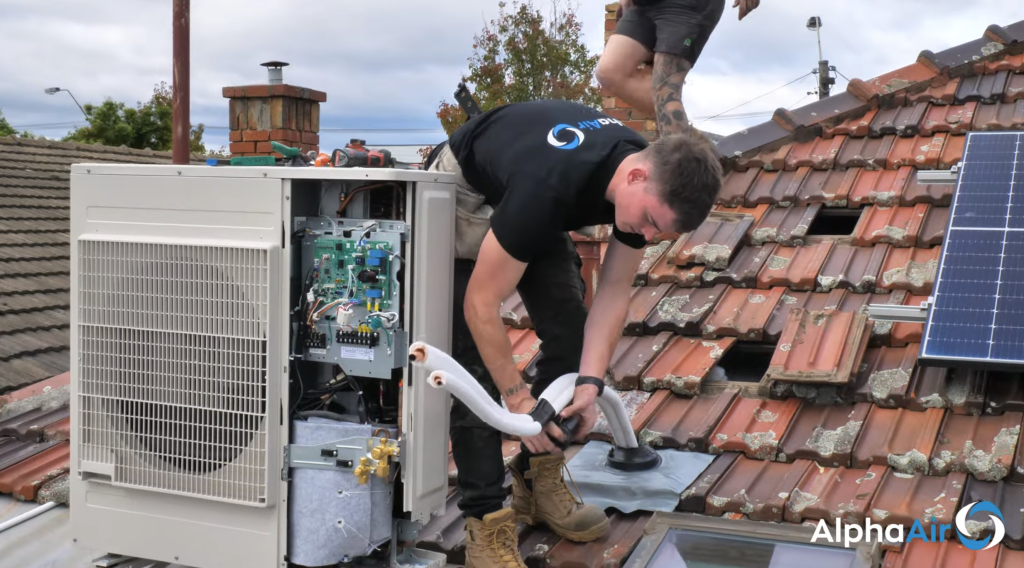
The headline driver is run time, which is why steady, moderate operation usually beats the old habit of blasting 21°C for twenty minutes and then switching off, since short bursts rarely remove enough humidity and leave rooms feeling clammy on muggy nights. Next comes set point: in summer, most Melburnians feel comfortable at 24 – 25°C once west facing glass is shaded, and in winter 19 – 20°C paired with appropriate clothing feels cosy without hammering the meter, so even a one degree tweak can shift the bill more than you’d expect. Sizing matters too, and not because “bigger is better”; an oversized unit tends to hit the set point quickly, cycle on and off, and waste energy without properly dehumidifying, while an undersized unit grinds away on 38°C days and never quite catches up, so aim for that sweet spot where the system runs gently for longer and the room feels consistently even. Installation quality is the quiet hero of lower bills: refrigerant lines with correct lengths and flare joints, a tidy condensate fall, smart indoor placement that throws air along the room rather than straight at the couch, and an outdoor unit with clear airflow so it can breathe on hot afternoons all add up to fewer watts for the same comfort. The home itself has a say draw blinds before the heat peaks, seal obvious draughts, shut doors you’re not using, and a 3.5 kW unit suddenly performs like a much larger one because you’ve reduced the load. If you’re weighing a split system Melbourne multi head arrangement, remember diversity is your friend; most households don’t run every head hard at exactly the same moment, and a well designed system can choose a slightly smaller outdoor unit without sacrificing comfort, provided your installer maps the real pattern of mornings, evenings, and weekends. Finally, maintenance is not glamorous yet absolutely decisive over a season: clean filters every few months, keep leaves off the outdoor coil, and book a pre season service so the unit doesn’t waste power fighting avoidable airflow and sensor issues, because nothing pushes up consumption like a choked filter on a 34°C northerly.
Real world examples and simple ways to save without feeling it
Take a small bedroom in Reservoir 12 m², decent curtains, average insulation and a tidy 2.5 kW head. On a typical summer evening it might average around 0.7 kW across four hours, which at 32c/kWh is about $0.90 for the night; add a ceiling fan on low and you’ll feel just as comfortable at 25°C as you would at 23°C without the fan, shaving a further slice off the bill over the season. Now shift to a 35 m² open plan living area in Point Cook with normal ceilings; a quality 6–7 kW unit might draw 1.4–1.9 kW once the space is down to temperature, so six hours on a hot Saturday could land around $2.70–$3.65, and that’s before you count the gains from closing the hallway door, drawing blinds at 3 pm, and keeping the outdoor unit out of the late sun. In winter, reverse cycle’s efficiency really pays for itself; a medium living area might average near 1.2–1.6 kW for a family evening, landing $1.15–$1.54 across the dinner to bed window, which compares very favourably to plug in heaters that turn every kilowatt into only one kilowatt of heat. The last layer of saving is behavioural but painless set schedules so the unit starts a touch earlier at a higher set point instead of fighting a baked room, keep a meter of space around the outdoor unit for airflow, and teach the household that doors and windows stay shut during refrigerated cooling because those habits do more for comfort and costs than any gadget. If your home will need three or more rooms sorted within a year, consider whether a multi head design or a staged path to a larger solution makes more sense for your layout and roof space, as the right plan is often the difference between bills that creep and bills that stay level. In the end, a split system Melbourne installation that’s correctly sized, well installed, and used with a calm, steady hand feels invisible in the best way, because the house simply sits at a comfortable temperature while your statement remains predictable, and that’s what most people are really chasing.