

Melbourne has felt particularly wintry lately, with cold mornings, grey skies and chilly evenings making it difficult to keep some homes genuinely comfortable. Even when the temperature outside does not look especially dramatic, damp air, wind and limited winter sunshine can make the cold settle into floors, walls and furnishings.
The Bureau of Meteorology notes that cold snaps remain possible throughout a Melbourne winter, regardless of the broader seasonal outlook. Anyone who has stepped onto a cold kitchen floor before sunrise or tried to warm a draughty living room after work hardly needs convincing, because Melbourne’s cold weather often feels more persistent inside the home than the thermometer suggests.
An ageing heater may run for hours without delivering even warmth, while portable electric heaters tend to concentrate heat in one small area and can become expensive when several are used at once. Modern reverse cycle heating offers a more practical answer by collecting heat from the outside air and transferring it indoors, allowing one system to provide efficient winter warmth and summer cooling.
Depending on the size, layout and construction of the property, the right solution may be a single split system, a multi head split system or fully ducted heating and cooling. Alpha Air designs and installs all three options across Melbourne, which means the recommendation can be based on the home and the way the family lives rather than a preference for one particular type of equipment.
Heating and Cooling Melbourne Homes Through a Cold Winter
A modern split system is often the quickest and most practical way to bring reliable heating into one important area. It can be ideal for an open living room, apartment, townhouse, home office or bedroom where the existing heating is weak or absent.
Because a split system directly serves the room where it is installed, the household can warm the occupied space without paying to heat every unused bedroom. Current inverter models gradually adjust their output as the room approaches the selected temperature, which helps maintain steady comfort without repeatedly switching between full power and no power.
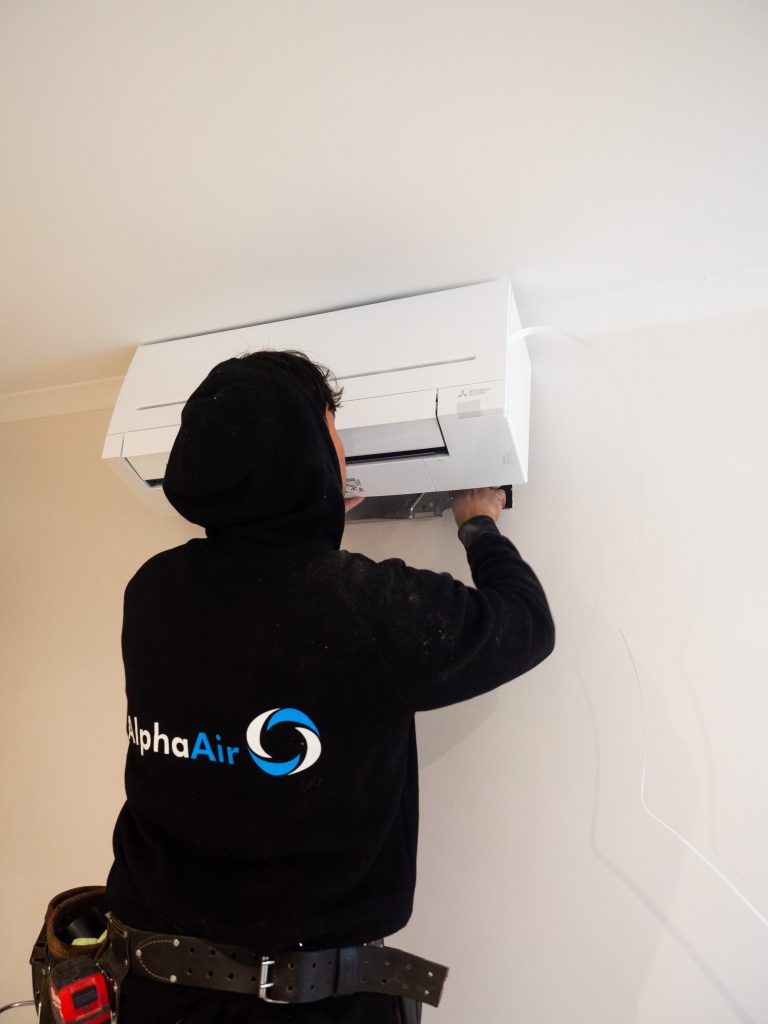
Placement has a noticeable effect on performance because the indoor unit needs to draw air in freely and distribute warm air across the occupied space. Alpha Air considers ceiling height, windows, room orientation, furniture and the likely path of the air before selecting a position, rather than simply choosing the easiest section of wall.
When several rooms need independent comfort, a multi head split system can connect multiple indoor units to a single outdoor unit. Each room has its own indoor head and controls, so one person can warm a study during the day while bedrooms remain off, then the family can change the pattern as evening arrives.
This arrangement is particularly useful in Melbourne townhouses, apartments, double storey homes and properties with limited roof space. It also reduces the number of outdoor units required, which can preserve garden space and provide a neater result around balconies, courtyards and narrow side access.
For households that want discreet and consistent comfort across most of the property, ducted heating and cooling can deliver conditioned air through ceiling or floor outlets. The main equipment remains largely out of sight, while a central controller allows the family to manage temperature and operating zones.
| System type | Often best for | Comfort and control | Important design detail |
|---|---|---|---|
| Single split system | One living area, bedroom, apartment or home office | Direct control of one frequently used space | Correct capacity and indoor unit placement are essential for even air distribution |
| Multi head split system | Several rooms where roof access or outdoor space is limited | Separate temperature control for each indoor unit | The combined room requirements must be matched carefully to the outdoor unit |
| Ducted heating and cooling | Whole home comfort across multiple rooms or levels | Central control with practical day and night zoning | Duct layout, outlet positions, return air capacity and zone design all influence performance |
None of these options is automatically better than the others because each serves a different type of home. A well chosen split system can outperform an oversized ducted installation in a compact apartment, while a thoughtfully zoned ducted system may be far more comfortable than several unrelated heaters in a large family home.
Why Sizing, Zoning and Airflow Matter
Heating performance begins with correct capacity because a unit that is too small may run constantly without properly warming the room, while an unnecessarily large unit may reach its target too quickly and cycle more often than intended. Floor area is only the starting point, since insulation, ceiling height, glazing, orientation and local exposure also affect how much heating the space requires.
A modern townhouse with double glazing may retain heat well, while an older weatherboard home with high ceilings and air leakage can require a different approach even when the floor plans appear similar. This is why a proper assessment is more reliable than selecting equipment from a simple room size chart.
Zoning adds another layer of control to ducted heating and cooling by allowing the household to condition the areas being used rather than the entire property at every moment. A practical design might separate living areas from bedrooms, which means the family can warm the kitchen and lounge during the evening before changing over to the bedroom zone later at night.
More zones do not automatically produce a better result, however, because the system still needs enough open outlets to move air safely and efficiently. Effective zoning is a balance between flexibility and airflow, with the equipment, ductwork and controls designed to work together.
Return air is equally important in a ducted system because the air supplied to each room needs a suitable path back to the central unit. A restricted or undersized return can contribute to noise, uneven temperatures and unnecessary pressure within the ductwork, even when the heating equipment itself is excellent.
Split systems manage their return air through the indoor unit, but they still need breathing room around the intake and a clear path for the discharged air. Installing a wall unit inside a tight alcove or directing its airflow straight into a large piece of furniture can limit circulation and leave parts of the room noticeably cooler.
Good design is rarely about adding unnecessary complexity. It is about choosing sensible outlet positions, allowing air to move naturally and giving the system the capacity to handle a cold Melbourne morning without making the home noisy or uncomfortable.
Choosing the Right System Before the Next Cold Morning
The easiest way to narrow the options is to consider which rooms need heating and when they are normally occupied. A household that gathers in one open living area may only require a quality split system, while a family using bedrooms, a study and separate living spaces throughout the day may benefit from a multi head or zoned ducted solution.
The building itself will also guide the decision because apartments and flat roof homes may not have the ceiling space required for ductwork. Larger single level homes often suit ducted installations, while multi head systems can solve access challenges in double storey properties without placing an outdoor unit beside every room.
Energy efficiency deserves attention, although the model rating is only part of the picture. A highly efficient system will still struggle if it is incorrectly sized, poorly positioned or connected to restrictive ductwork, which is why equipment selection and installation quality should be considered together.
It is also worth remembering that reverse cycle technology provides cooling once summer returns. Melbourne weather has a habit of changing quickly, so an installation completed during winter can solve the immediate heating problem while preparing the home for hot afternoons and uncomfortable summer nights.
If an existing system is producing weak airflow, unusual sounds, inconsistent temperatures or rising energy costs, it may need professional servicing rather than immediate replacement. Alpha Air provides heating and cooling repairs and servicing and can assess whether the current equipment can be restored or whether an upgrade would offer better long term value.
Choosing a new system should feel straightforward once the home has been properly assessed. Alpha Air takes the time to understand the layout, household routine, comfort concerns and available budget before recommending a split system, multi head split system or ducted heating and cooling design.
With Melbourne’s cold weather already making itself felt, contact Alpha Air today for a tailored quote and professional installation that will keep your home warm now and comfortably prepared for every season ahead.